
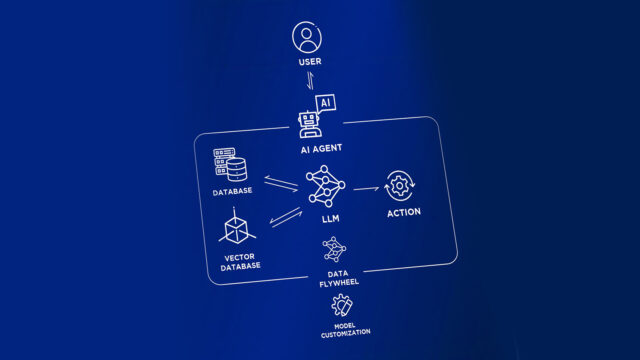
Agentic AI: Scaling Autonomy with Agentic AI Implementation Strategy WGS Partner Indonesia
The evolution of artificial intelligence has moved from passive rule-based programming to sophisticated machine learning, and now into the transformative era of Agentic AI. Unlike traditional systems that react to specific user prompts, Agentic AI functions as a proactive, autonomous entity capable of setting goals, planning complex multi-step workflows, and adapting to real-time environmental data without constant human oversight.
Deploying an Agentic AI Implementation Strategy WGS Partner Indonesia framework allows organizations to automate complex, open-ended operational challenges. Headquartered in West Java, Walden Global Services (WGS) serves as an enterprise IT enabler—guiding organizations across Indonesia through the complexities of autonomous system architecture, workflow orchestration, and large-scale digital transformation.
Goal Definition ➔ Autonomous Planning ➔ Multi-Step Reasoning ➔ Independent Execution ➔ Real-Time Adaptation
1. Defining the Shift: From Passive Models to Agentic Autonomy
Traditional AI frameworks—including standard Large Language Models (LLMs)—frequently hit a “ceiling” because they rely on human prompts to trigger every step of a process.
[ Passive Prompting ] ➔ [ Reactive Execution ] ➔ [ Human-in-the-Loop Bottlenecks ] ➔ [ Limited Task Scalability ]
-
The Traditional Bottleneck: Passive AI models are excellent at generating content or summarizing text but lack the ability to initiate or manage end-to-end business workflows.
-
The Agentic Paradigm: Agentic AI is goal-oriented. By defining high-level objectives, enterprises empower the system to break problems into sub-tasks, iterate based on feedback, and resolve unexpected obstacles independently.
Capability Overview: Traditional AI vs. Agentic AI Implementation Strategy WGS Partner Indonesia
| Operational Dimension | Traditional Passive AI / LLMs | Agentic AI Implementation Strategy WGS Partner Indonesia |
| Operational Trigger | Requires human input for every step | Autonomous initiation based on predefined goals |
| Workflow Scope | Reactive tasks (e.g., chat/summarization) | End-to-end management of complex, multi-step workflows |
| Decision-Making | Fixed rule execution; lacks autonomy | Probabilistic reasoning & dynamic strategy adjustment |
| Environment Adaptation | Static; requires manual retraining | Real-time adjustment based on new environmental data |
| Human Dependency | High (constant prompting required) | Low (independent execution with strategic oversight) |
| Implementation Partner | Standard SaaS software providers | Enterprise AI architecture & local support via WGS |
2. Core Operational Pillars of Agentic AI
Successful implementation relies on building frameworks that prioritize both high-level autonomy and enterprise-grade security:
Goal-Driven Input ➔ Probabilistic Reasoning Engine ➔ Autonomous Planning ➔ Continuous Feedback Loop
-
Autonomous Problem-Solving: Systems identify operational issues, architect solutions, and execute tasks independently, drastically reducing latency in critical sectors like logistics and healthcare.
-
Multi-Step Workflow Orchestration: Agentic platforms decompose large initiatives into manageable sub-tasks, ensuring that complex projects—such as financial reporting or automated supply chain adjustments—are executed flawlessly.
-
Dynamic Scalability: Organizations can scale their operations via autonomous agents without the proportional increase in human headcount, significantly lowering long-term operational costs.
-
Collaborative Intelligence: Agentic systems do not replace human experts; they amplify productivity by assuming repetitive administrative burdens, leaving humans to focus on high-value strategic decision-making.
Real-World Impact: Driving Enterprise Value
Implementing autonomous, goal-directed AI architectures provides quantifiable improvements in efficiency, adaptability, and operational resilience:
Business Requirement ➔ WGS Agentic Pipeline ➔ Autonomous Action ➔ Scalable Digital Growth
Quantifiable Operational Improvements:
-
Operational Agility: Real-time adaptation ensures businesses remain competitive despite market disruptions.
-
Reduced Human-in-the-Loop Friction: Significant recovery of time currently spent on routine administrative workflows.
-
Reliable Compliance: Autonomous monitoring ensures internal policies are followed without the need for manual, error-prone audits.
-
Increased Resource Optimization: Smart production lines and financial bots maximize output while minimizing resource wastage.
Strategic System Integration with Walden Global Services (WGS)
Deploying Agentic AI is an architectural transformation requiring expertise in middleware integration, custom model training, and ethical compliance frameworks.
Strategy Consultation ➔ AI Architecture Blueprint ➔ Autonomous Pipeline Deployment ➔ Managed WGS Support
The WGS System Integration Advantage: Operating from West Java and serving enterprise clients across Indonesia, Walden Global Services (WGS) serves as the primary implementation partner for Agentic AI Implementation Strategy WGS Partner Indonesia initiatives. WGS designs tailored AI ecosystems—integrating agentic autonomy with human-in-the-loop oversight—to help organizations modernize while maintaining complete operational control.
Partnering with WGS allows enterprise directors, IT leaders, and operations managers to transform their organizations into agile, self-optimizing entities.