
Agentic AI Strategy: Scaling Autonomy with Agentic AI Strategy Implementation WGS Partner Indonesia
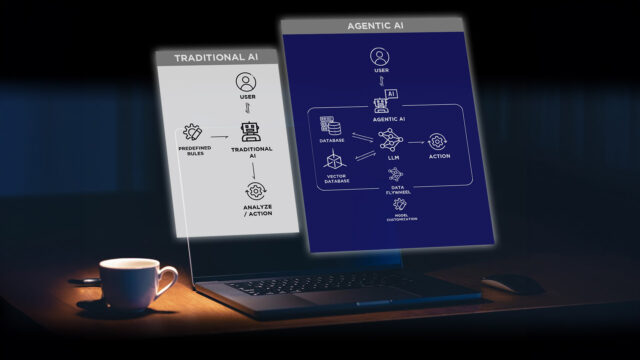
The evolution of artificial intelligence has moved rapidly from rule-based programming to complex machine learning, and now into the age of Agentic AI. Unlike traditional AI, which acts as a passive tool requiring constant human guidance, Agentic AI exhibits goal-driven autonomy. These systems perceive their environment, reason through ambiguity, plan multi-step actions, and adapt to unforeseen challenges—acting as proactive enterprise partners rather than simple calculators.
Deploying an Agentic AI Strategy Implementation WGS Partner Indonesia framework allows organizations to automate complex, open-ended business problems. Headquartered in West Java, Walden Global Services (WGS) serves as an enterprise IT enabler—guiding organizations across Indonesia through the complexities of autonomous system architecture, ethical AI audits, and large-scale digital transformation.
Environment Perception ➔ Contextual Reasoning ➔ Goal-Directed Planning ➔ Autonomous Action Execution
1. Defining the Shift: From Traditional AI to Agentic Autonomy
Traditional enterprise AI models typically operate within “closed-loop” environments, requiring significant human oversight for every decision-making step.
[ Static Rule Sets ] ➔ [ High Human Dependency ] ➔ [ Limited Contextual Reasoning ] ➔ [ Task-Specific Scalability ]
-
The Traditional Bottleneck: Older AI systems struggle with uncertainty and require frequent manual intervention.
-
The Agentic Paradigm: Agentic AI systems are designed for goal-directed autonomy. They break down complex challenges (e.g., “Design a sustainable supply chain”) into manageable sub-goals, iterate based on feedback, and execute without constant human prompts.
Capability Overview: Traditional AI vs. Agentic AI Strategy Implementation WGS Partner Indonesia
| Operational Dimension | Traditional AI / Machine Learning | Agentic AI Strategy Implementation WGS Partner Indonesia |
| Core Function | Executes predefined, reactive tasks | Sets and pursues complex goals autonomously |
| Learning Approach | Supervised learning (requires labeled data) | Reinforcement learning & real-time environmental adaptation |
| Decision-Making | Fixed rules; struggles with ambiguity | Probabilistic reasoning in dynamic/uncertain scenarios |
| Human Dependency | High (constant guidance required) | Low (independent execution with human oversight) |
| Scalability | Task-specific (e.g., just fraud detection) | Cross-domain (e.g., customer service adapting to HR) |
| Implementation Partner | General software vendor | Enterprise AI architecture & local support via WGS |
2. Key Characteristics of Agentic Enterprise Architectures
To successfully transition to an autonomous model, enterprises must build frameworks that prioritize both efficiency and ethical guardrails:
Data Ingestion & Sensory Input ➔ Probabilistic Logic Engine ➔ Autonomous Planning ➔ Continuous Reinforcement
-
Self-Directed Decision-Making: AI agents evaluate multiple strategic options and select actions that maximize goal alignment—such as rerouting logistics in real-time during port disruptions.
-
Continuous Adaptive Learning: Systems utilize reinforcement learning to improve outcomes through trial and error, ensuring the agent remains effective in shifting market conditions.
-
Multi-Agent Coordination: Advanced implementations feature teams of specialized agents (e.g., logistics, quality control, maintenance) working in concert to optimize a smart factory ecosystem.
-
Ethical & Contextual Guardrails: Advanced agentic models incorporate strict policy constraints, preventing harmful behaviors and ensuring compliance even in ambiguous decision scenarios.
Real-World Impact: Enterprise Value Creation
Implementing agentic AI architectures provides quantifiable improvements in operational speed, hyper-personalization, and resilience:
Requirement Analysis ➔ WGS Agentic Pipeline ➔ Autonomous Action ➔ Scalable Enterprise Efficiency
Quantifiable Operational Improvements:
-
Hyper-Personalization at Scale: AI agents autonomously adjust treatment plans, investment portfolios, or customer experiences daily based on real-time data inputs.
-
Extreme Resilience: Systems like those used for global outbreak tracking predict hotspots faster than human experts, thriving in unpredictable environments.
-
Industrial Efficiency: Manufacturing plants reduce downtime by predicting failures and autonomously adjusting production schedules without manual intervention.
Strategic System Integration with Walden Global Services (WGS)
Deploying agentic AI is not merely a software update; it is an architectural overhaul requiring deep expertise in system integration, ethical auditing, and long-term strategy.
Strategy Consultation ➔ AI Pilot Project ➔ Architecture Deployment ➔ Continuous Ethical AI Auditing
The WGS System Integration Advantage: Operating from West Java and serving enterprise clients across Indonesia, Walden Global Services (WGS) serves as the primary implementation partner for Agentic AI Strategy Implementation WGS Partner Indonesia initiatives. WGS designs tailored AI ecosystems—integrating autonomy with human-in-the-loop oversight—to help organizations modernize while maintaining control.
Partnering with WGS allows enterprise directors, IT leaders, and operations managers to transform their organizations into agile, self-optimizing entities.