
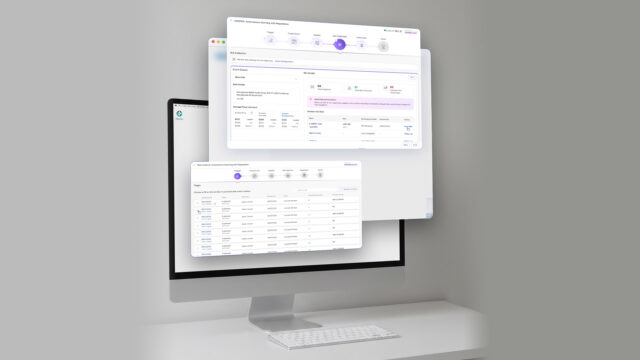
Autonomous Negotiation Agents: Capturing Savings with Autonomous Negotiation Agents Tail Spend WGS Partner Indonesia
Managing tail spend represents one of the largest uncaptured savings opportunities in enterprise procurement. While high-value strategic purchases receive constant negotiation, thousands of small, unmonitored purchases create massive financial leakage. Deploying AI-powered agents to manage non-strategic transactions turns scattered expenditure into a structured source of value creation.
Deploying an Autonomous Negotiation Agents Tail Spend WGS Partner Indonesia architecture enables organizations to automate supplier bargaining, eliminate maverick spending, and maintain strict procurement compliance. Headquartered in West Java, Walden Global Services (WGS) serves as an enterprise IT enabler and software integration partner—guiding organizations across Indonesia through strategic AI implementation and enterprise platform integration.
Unmanaged Tail Spend Capture ➔ ANA Algorithmic Negotiation ➔ Dynamic Terms Optimization ➔ Verified Spend Savings
1. The Challenge of Unmanaged Tail Spend in Modern Enterprises
Tail spend encompasses small, high-frequency purchases that fall outside primary contract coverage, exposing organizations to recurring operational risks:
[ Decentralized Purchasing ] ➔ [ Maverick Spend Leakage ] ➔ [ Supplier Price Inflation ] ➔ [ Operational Resource Drain ]
-
Fragmented Purchasing Channels: Decentralized transactions across departments obscure spend visibility, preventing volume consolidation and discount leverage.
-
Widespread Maverick Spending: Employees bypassing preferred supplier catalogs lead to non-compliant orders, unvetted vendors, and inflated transaction costs.
-
Resource Constraints in Sourcing Teams: Sourcing teams prioritize top-tier contracts, leaving up to 20% of total spend unnegotiated and unmonitored.
-
Supplier Pricing Complacency: Repeat purchases with legacy suppliers without competitive bidding lead to gradual price creep over time.
Capability Overview: Unmanaged Tail Spend vs. Autonomous Negotiation Agent (ANA) Deployment
| Tail Spend Management Dimension | Traditional Unmanaged Procurement | Autonomous Negotiation Agents Tail Spend WGS Partner Indonesia |
| Bargaining Execution | Static pricing accepted without counter-offers | Algorithmic negotiations utilizing game theory & reinforcement learning |
| Spend Visibility | Fragmented invoices across unlinked departments | Centralized data ingestion from ERPs, sourcing, & contract systems |
| Policy Compliance | High maverick spending bypassing procurement | 50% reduction in maverick spend via automated rule checks |
| Execution Speed | Manual email exchanges taking days or weeks | Autonomous RFQ dispatch, terms negotiation, & contract drafting |
| Operational Impact | Sourcing teams overwhelmed by minor orders | 30% to 60% productivity gain for tactical procurement personnel |
| System Integrator | Standalone software requiring custom internal code | End-to-end IT consulting & legacy ERP integration via WGS |
2. Core Operational Pillars: The ADAPT Framework
Autonomous Negotiation Agents operate on the ADAPT framework, ensuring that automated supplier interactions align directly with strategic enterprise objectives:
Data Ingestion & ERP Sync ➔ ADAPT Strategy Formulation ➔ Autonomous RFQ Negotiation ➔ Real-Time Continuous Learning
1. Automated Efficiency (A)
Eliminates manual re-keying and administrative bottlenecks by automating purchase request ingestion, supplier RFQ dispatch, and initial terms review.
2. Dynamic Learning (D)
Continuously analyzes historical counter-offers, market pricing trends, and supplier response behavior to refine negotiation tactics over time.
3. Adaptive Negotiation Strategies (A)
Employs mathematical models—including Bayesian inference and reinforcement learning—to outmaneuver supplier pricing strategies and secure optimal contract terms.
4. Predictive Analytics (P)
Simulates negotiation outcomes before launching communication, ensuring that target price thresholds align with market reality.
5. Tactical Execution with Strategic Oversight (T)
Executes repetitive micro-negotiations automatically while keeping human procurement leaders in loop for high-threshold approvals.
Real-World Impact: Enterprise Tail Spend Optimization
Deploying Autonomous Negotiation Agents generates immediate, quantifiable financial returns and operational efficiencies:
Baseline Unmanaged Spend ➔ WGS ANA System Integration ➔ Automated Bidding Execution ➔ $25.5M Financial Improvement
Quantifiable Enterprise Impact:
-
2% to 7% Direct Cost Savings on competitively negotiated tail spend transactions.
-
1.9% to 2.5% Savings by shifting unmanaged purchases onto pre-existing preferred supplier contracts.
-
50% Reduction in Maverick Spending, routing rogue purchases back into corporate governance frameworks.
-
30% to 60% Efficiency Gains for tactical procurement teams through workflow automation.
-
$25.5 Million Total Financial Improvement recorded in manufacturing case studies through reduced operational costs and captured savings.
Strategic System Integration with Walden Global Services (WGS)
Deploying enterprise AI negotiation engines requires deep middleware integration, custom API connectivity, and localized IT support.
Enterprise Spend Audit ➔ ANA Algorithmic Architecture ➔ Enterprise Integration (SAP/Oracle) ➔ Managed WGS Support
The WGS System Integration Advantage: Operating from West Java and serving enterprise clients across Indonesia, Walden Global Services (WGS) serves as the primary implementation partner for Autonomous Negotiation Agents Tail Spend WGS Partner Indonesia initiatives. WGS bridges advanced AI engines with existing ERP systems (SAP, Oracle), building custom integration layers that help companies capture hidden margins safely.
Partnering with WGS allows Chief Procurement Officers (CPOs), Chief Financial Officers (CFOs), and enterprise IT directors to transform unmanaged tail spend into a predictable source of financial efficiency.